
Transforming Monobrand Ecommerce in 6 Months: Our Client's Case for Going Headless (with cool SEO)
How we transformed a broken WordPress/WooCommerce site into a lightning-fast headless ecommerce solution, achieving 30x organic traffic growth
Transforming Monobrand Ecommerce in 6 Months: Our Client's Case for Going Headless (with cool SEO)
Allen Digital Studio
So this DTC monobrand (selling in 40+ countries worldwide) comes to me absolutely frustrated with their website situation. The agency they hired built them this WordPress + WooCommerce site that was basically a nightmare. Slow as hell, terrible user experience, weak customization options, and a design that looked like it was from 2015. Customers were bouncing left and right, conversions were tanking, and they were getting roasted about how bad their site was. The whole WordPress thing was supposed to give them flexibility, easy integrations, but instead they got stuck with this clunky, slow mess that couldn't do what they actually needed. So we ditched the whole thing and built them a custom headless ecommerce solution from scratch. One that actually worked for speed, user experience, and SEO. Spoiler alert: the transformation was pretty wild.
Common problem - headless solution
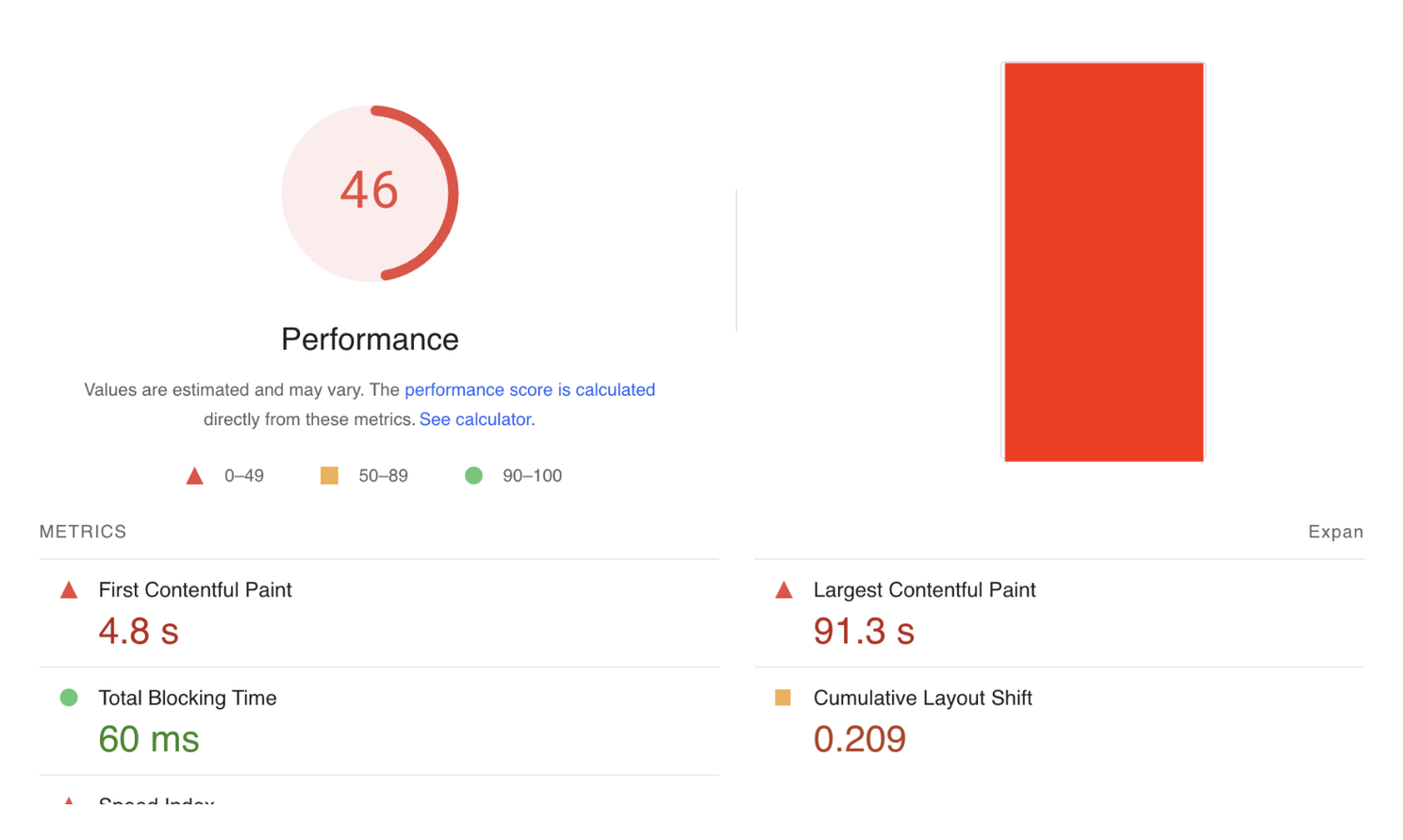
The technical audit revealed just how broken everything was. Their site was crawling at 40-50 points on speed tests, absolutely loaded with visual builder plugins that were eating up resources like crazy. The visual builder itself was so slow it took forever to make any changes, and every edit created more cache files that just kept piling up. They had plugins for everything - SEO plugins conflicting with each other, multiple image optimization tools doing the same job, random widgets they never used. The worst things was no mobile-first design of the website.
The hosting situation was a disaster too. No proper caching, database connections dropping randomly, and images that were massive - some over 1MB each. The English version was completely broken on a subdomain that redirected to an old version of the site. Plus they had what looked like pirated plugins that couldn't even be updated.
After trying to optimize what they had - getting it from 40 to maybe 60 points and setting up basic caching - it was clear this wasn't fixable. The WordPress setup was fundamentally broken, overloaded. No integrations with their delivery systems, terrible UX that was driving customers away, and zero flexibility to actually customize anything without breaking something else. That's when we decided to scrap it all and build something that actually worked.
Serverless, headless approach for business logic
Here's where things got interesting. Since they had zero technical team, whatever I built had to be super maintainable. With Shopify, sure, you get that out of the box, but there were some major dealbreakers for this client.
First off, data ownership. With Shopify, your customer data lives on their platform and you're essentially renting access to it. They needed full control over where their data lives and how it's processed.
Then there's the custom business logic problem. Want something specific that Shopify doesn't do? You're looking at expensive custom development that's limited by Shopify's constraints, or you're buying premium apps that cost a fortune. Custom checkout logic alone can run $5,000-$25,000+, and you're still working within their framework. Yea, you can go with different approaches here, whether it is a headless approach via their StorefrontAPI or customization in Liquid, still you are adding more infrastructure to maintain, cost and time to it.
The real kicker was multi-store management. They wanted to eventually expand with different regional stores, and Shopify Plus pricing starts at $2,300-$2,500 per month for the base package. So I went with a stack that was both powerful and manageable. Supabase became the backend - it's basically like having a full database and API system that doesn't require a developer to babysit. Everything lives in their nice dashboard, super easy to understand. For hosting, I used Netlify because it handles all the deployment headaches automatically and scales without thinking about it.
The whole thing was API-first and serverless. When someone clicks "add to cart" on the website, it makes an API call to either Netlify or Supabase edge functions. These functions handle the business logic and update the data. Simple cause and effect - action A triggers API call, which leads to result B. No complex server management, no wondering if things will crash under load.
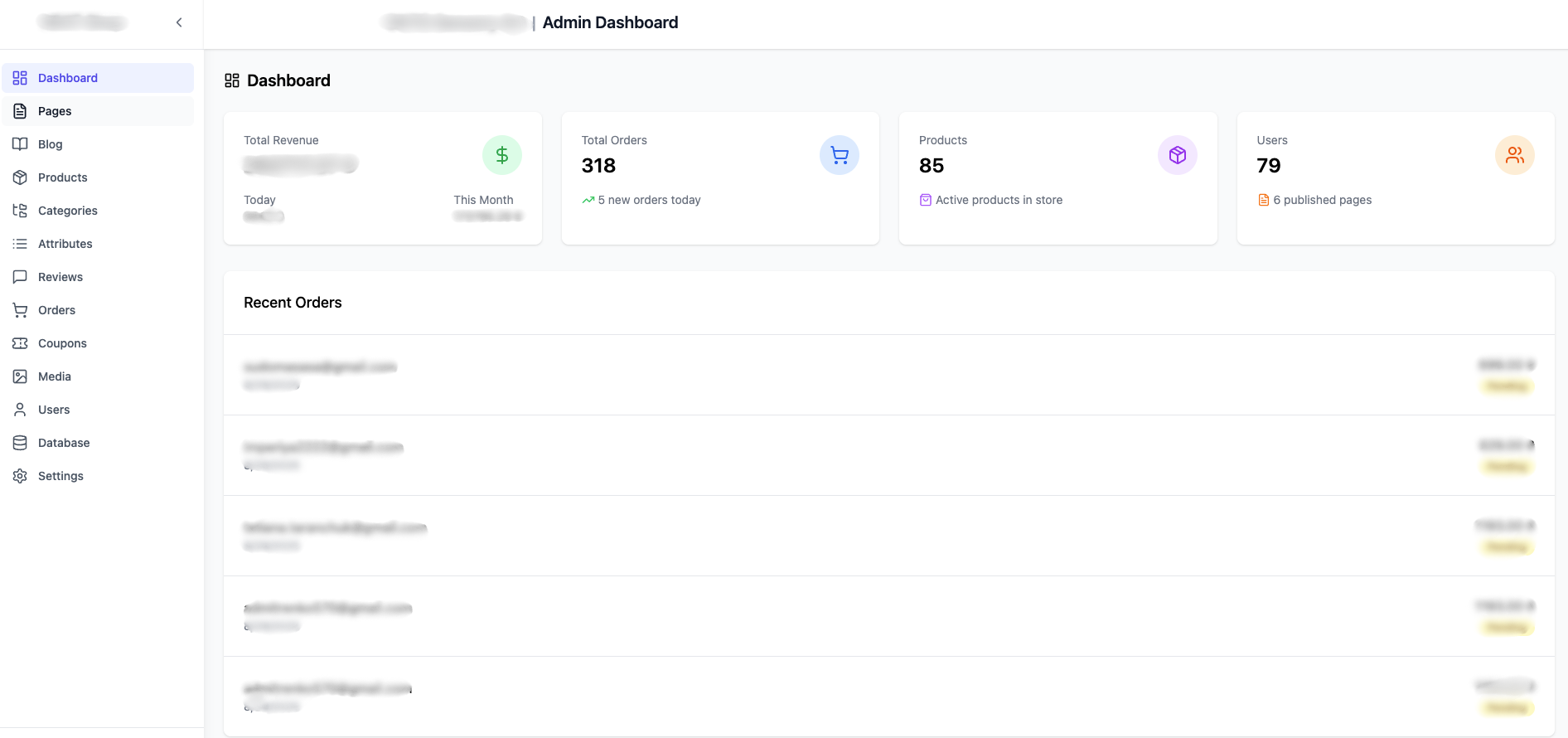
Built them a complete admin panel (Vite) with everything they wanted. CMS with drag-and-drop sections they could add to any page, order management, customer data, inventory tracking. Even hooked up easy Hotjar integration for user behavior tracking and Google Tag Manager for all their marketing pixels. The beauty was that their team could actually use it without needing to call a developer every time they wanted to change something.
For the storefront, I had to choose between NextJS and Astro. While NextJS is the obvious go-to, I went with Astro because of their islands architecture. This was perfect for an ecommerce site where you need static content (product descriptions, blogs, marketing pages) to load instantly, but only specific components like "add to cart" buttons or product galleries need JavaScript.
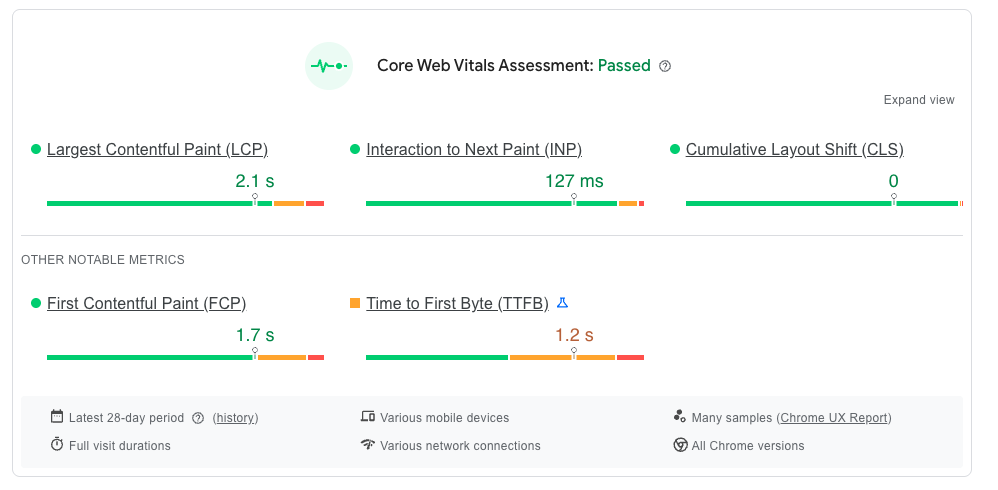
With Astro's approach, the page loads as pure HTML first, then only hydrates the interactive pieces when needed. So when someone lands on a product page, they see all the content immediately, but the shopping cart functionality loads separately without blocking anything. This gave us lightning-fast Core Web Vitals scores and way better SEO out of the box.
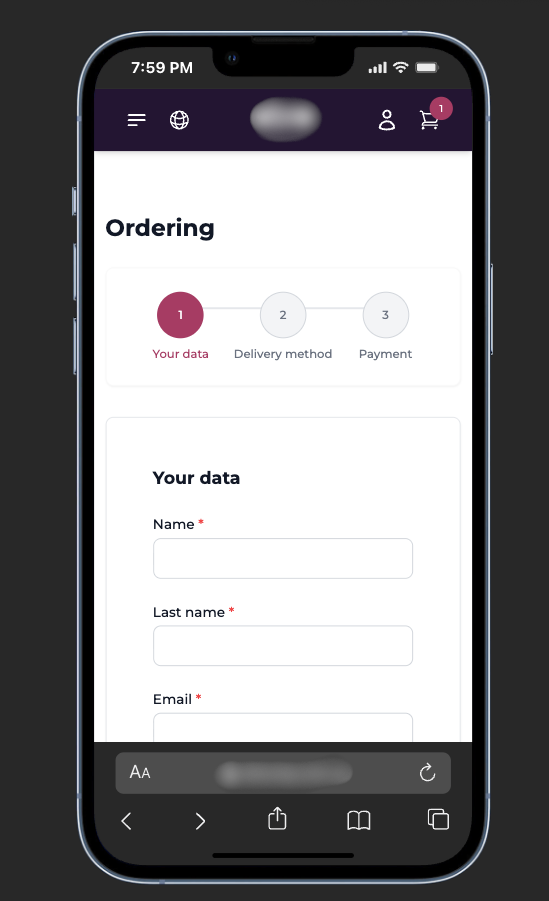
The design philosophy was simple: clean, modern, mobile-first. Since 80% of their traffic was mobile (pretty standard for DTC brands nowadays), everything had to work perfectly on phones first. We're talking thumb-friendly buttons, streamlined navigation, and a checkout process that doesn't make you want to throw your phone.
Checkout should be simple:
Step with basic data (literally 4 input fields)Step with delivery, you just pick your postal point3 payment options, with bank integration
Fact from that case: avg. hot leads time spent on website (entry point -> success page) ~1 minute
Built in CSR and SSR hybrid rendering - SEO-critical pages like product listings and blog posts get server-rendered for search engines, while interactive stuff like user accounts and cart management runs client-side for that smooth app-like feel. Best of both worlds without the complexity. Obviously we've implemented CDN caching for smaller amount of serverless functions invocations.
Added some nice touches too: Apify integration to pull their Instagram feed automatically, so their pages show real customer photos and reviews. Video previews on product cards and in product image galleries, reviews with likes and photos, a full blog for content marketing. Everything built with Astro's SEO package to make sure every page is optimized from day one.
The result was a site that loads in under 2 seconds even on slow mobile connections, looks modern without being cluttered, and actually converts visitors instead of frustrating them.
What about SEO?
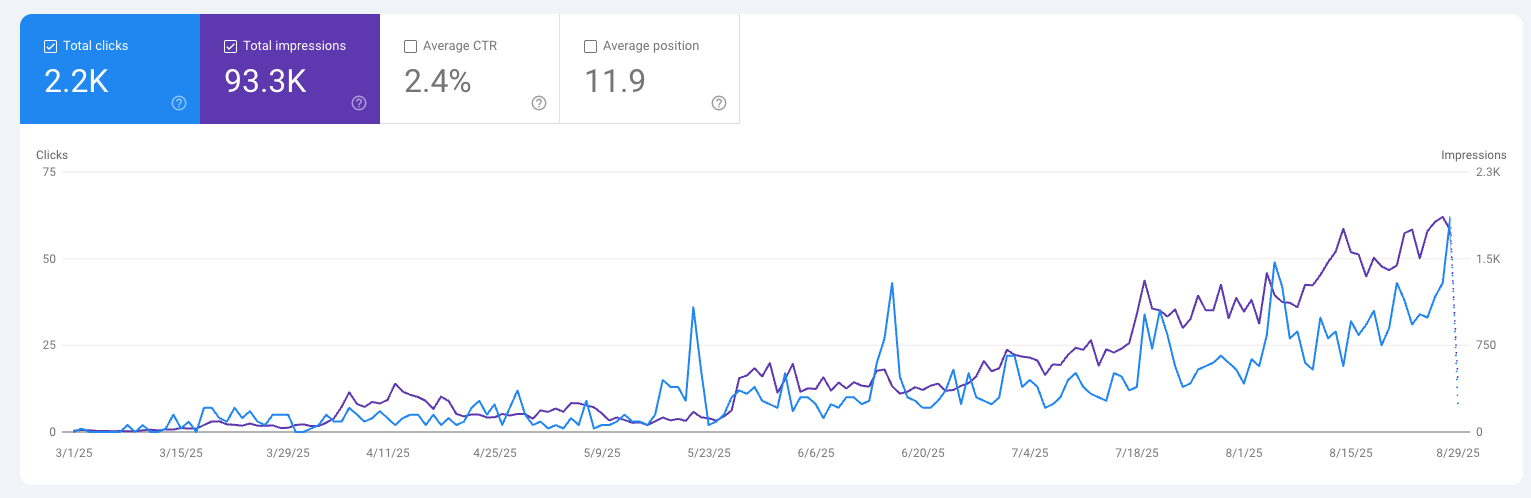
Now here's where the magic happened. We went from a measly 30 clicks in the first month to hitting ~30+ clicks daily by month 6. That's a 30x increase in organic visibility, and honestly, I wasn't surprised.
The numbers tell the story: we're now ranking for over 1,000 keywords, with only 10% being branded searches. That means 90% of our traffic is people who never heard of the brand before - pure discovery traffic that's converting like crazy.
Ranking Performance:
Top 1 for 32 keywords (the sweet spot)Top 3 for 62 additional keywordsTop 10 for 511 total keywords12 keywords in top 5 with KD 45-60 (according to Semrush)
Those KD scores are no joke - we're talking medium to difficult keywords where most sites need serious backlink power to compete. But we cracked them with solid content strategy and technical optimization instead.
The GEO/LLM SEO Approach I implemented what people call "GEO" (Generative Engine Optimization) best practices. Nobody really knows what works yet for AI search, but I focused on strong traditional SEO fundamentals while structuring content for AI consumption. Added comprehensive JSON-LD markup, microdata, Open Graph tags, and automatic product feeds for Google Merchant.
Content Strategy That Actually Works Instead of guessing, I constantly researched new keyword opportunities and optimized pages based on what was actually working. Found some absolute unicorn keywords - low competition, high intent terms that competitors missed completely. The approach was proactive: spot the opportunity, create OR edit the content, watch it rank.
The Budget Reality Here's the kicker: with only about $2K monthly ad spend, ~40% of all orders still come from organic traffic. That's the power of getting SEO right from day one instead of treating it as an afterthought. We only bought 3 backlinks during the entire 6 months - imagine what we could have done with a proper link building budget.
Sustainable Growth Best part? The traffic keeps growing month over month without additional SEO investment. Each optimization compounds, each ranking improvement brings more visibility, and more visibility brings more sales. It's the gift that keeps giving.
Want more? No problem!
Future Scaling: Enterprise-Ready Headless Solutions
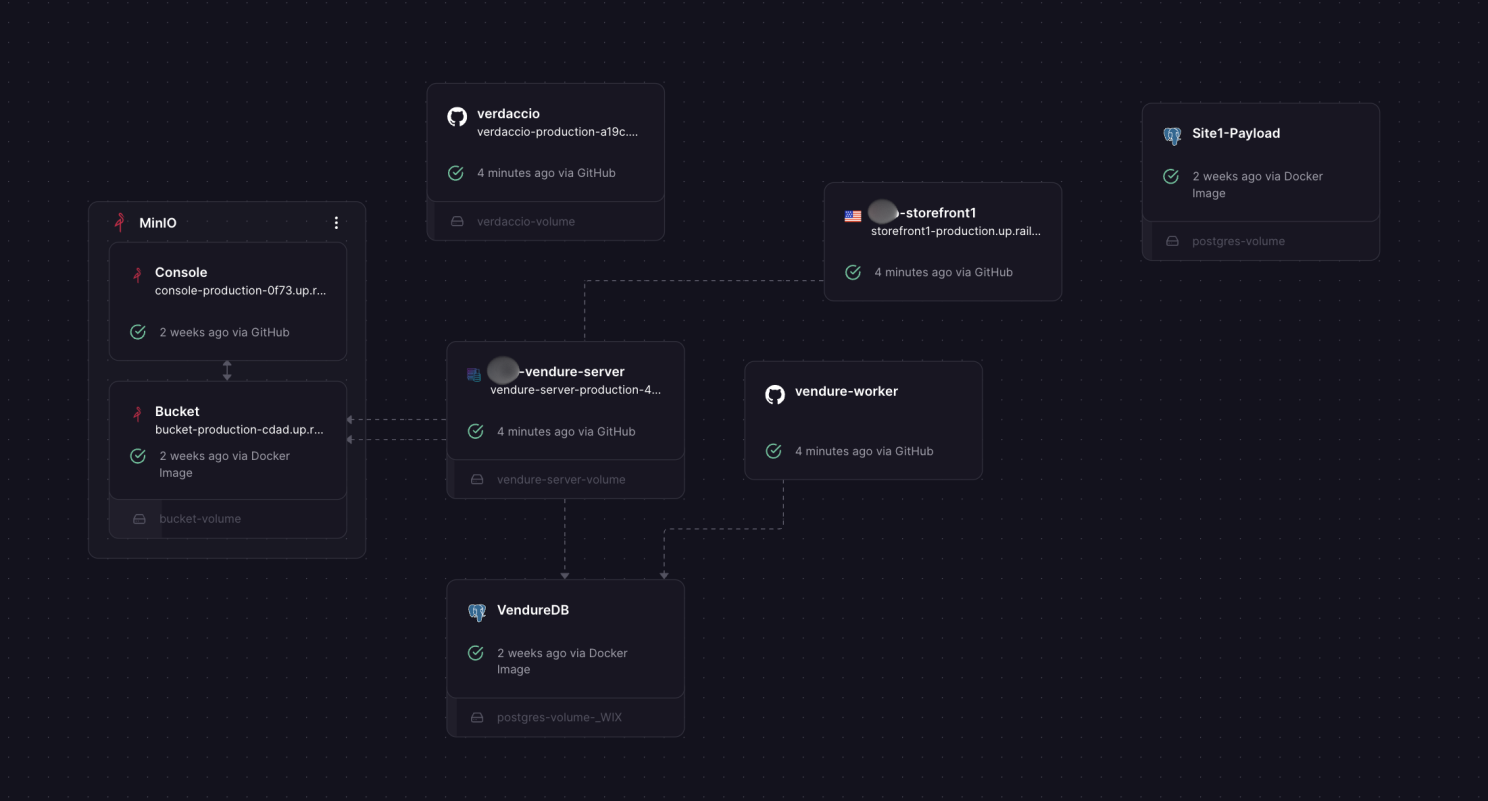
While our current setup works brilliantly for their needs right now, growing businesses eventually need more sophisticated infrastructure. That's where the beauty of headless architecture really shines - easy migration paths without starting over.
The next logical step would be transitioning to enterprise-grade open-source solutions like Vendure for commerce engine and Payload for content management. Both integrate seamlessly with our existing data and can be deployed on platforms like Railway for simple management. The screenshot shows how clean this setup looks - each service runs independently but talks to the same database/databases, maintaining all existing content and customer data.
Multi-Tenant Distributor Heaven
Here's where things get really interesting for monobrands with distributor networks. Vendure's multi-tenant architecture allows one backend to power unlimited storefronts. Each distributor gets their own branded storefront with separate login access, customized permissions, and isolated inventory management. Think of it as giving each distributor their own store while maintaining centralized control.
Template-Based Deployment Magic
Want to launch a new market or distributor? Deploy a new storefront from a template in minutes, not months. Each new store inherits the proven design and functionality while allowing custom branding, local pricing, and region-specific features. It's like having a franchise system but with complete technical control.
Advanced Business Logic Capabilities
Need complex B2B pricing tiers? Multi-currency support? Custom approval workflows? Advanced inventory management? Vendure's plugin system handles it all. Unlike SaaS platforms that limit customization, you can build exactly the business logic you need.
Mobile Apps and Omnichannel Ready
The same backend APIs that power the websites can feed mobile apps, POS systems, or any future sales channel. One product catalog, one inventory system, one customer database - infinite ways to sell.
The Migration Reality
Best part? Zero downtime migration. The new system connects to existing data, content managers keep using familiar interfaces, and customers see seamless improvements. It's evolution, not revolution.
This infrastructure scales from startup to enterprise without the typical growing pains. Whether it's 5 distributors or 500, the system handles it elegantly while keeping operational complexity minimal.
Why Headless? SCALING!
Think of headless ecommerce like LEGO blocks instead of a single molded toy. In traditional setups, your frontend (what customers see) and backend (database, order processing, inventory) are glued together - change one thing and you risk breaking everything else.
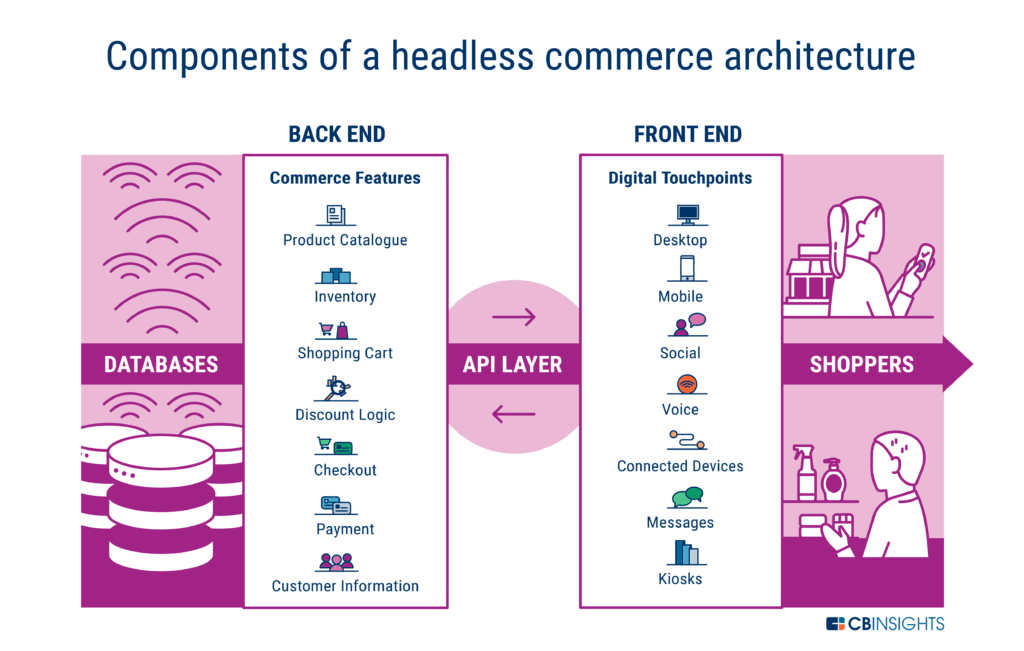
With headless, these components live separately and talk through APIs. When a customer clicks "add to cart," the frontend makes an API call to the backend, which processes the request and sends back the data. The frontend then displays the result. Simple, clean, and each piece can work independently.
Independent Scaling: During Black Friday, your frontend might need more resources to handle traffic while your inventory system runs fine. With headless, you scale only what needs it instead of the entire system. It's like adding more cashiers without rebuilding the whole store.
Component Flexibility: Need a better search function? Swap it out without touching your checkout process. Want to add a mobile app? Connect it to the same backend without rebuilding everything. Each piece can be upgraded, replaced, or optimized independently.
Multi-Channel Growth: Start with a website, add a mobile app later, then maybe voice ordering or social commerce. One backend powers all channels, but each frontend can be completely different and optimized for its specific use case.
Performance at Scale: Traditional platforms slow down as you add features, products, and traffic because everything's interconnected. Headless systems distribute the load - your product catalog API handles searches while your checkout API processes payments, each optimized for its specific job.
Cost-Effective Expansion: Instead of paying for enterprise-level everything, you only upgrade the components that need it. Need better payment processing? Upgrade just that API. Need faster image loading? Optimize just the media service.
Future-Proofing: When new technologies emerge (AI product recommendations, AR try-ons, voice commerce), you can integrate them without rebuilding your entire platform. The modular approach means you're always ready for what's next.
For a brand scaling internationally like our client, this means they can launch in new countries by creating localized frontends while using the same proven backend infrastructure. No rebuilding, no starting over - just smart scaling.
Ready to see what your brand can really achieve?

ð +1 564-888-0562 (US/Canada) ð +48 450-033-500 (Europe) ð allendigital.studio
Project Info
Client
Confidential DTC Monobrand
Industry
Ecommerce
Year
2025